
Why Your Offer Isn't Selling (And How to Fix It)
You've put your heart into creating your offer. You've written the sales page, shared it on Instagram, and maybe even sent an email to your list. And then the silence sets in.
If that sounds familiar, I want you to know something first: a quiet launch is not a reflection of your worth, your talent, or your potential. It is information. And information is something we can work with.
The truth is, most offers that don't sell aren't bad offers. They are simply missing one or a few key ingredients that make the difference between a "maybe someday" and a "yes, where do I sign up?"
I've seen this pattern over and over again in my own business and in the businesses of the women I support. And once you know what to look for, fixing it becomes a lot less overwhelming than it feels right now.
In this post, we are breaking down the 5 key differences between an offer that sells and one that doesn't, the common mistakes that quietly sabotage even the best offers, the tools and resources to help you build smarter, and a practical checklist you can use to audit your offer today.
If you haven't already, I'd also recommend reading these alongside this post:
They are part of the same conversation, and together they will give you a really solid foundation to work from.
Ready? Let's get into it.
The 5 Differences Between an Offer That Sells and One That Doesn't
1. One Speaks to a Specific Person. The Other Tries to Speak to Everyone.
2. One Sells the Transformation. The Other Sells the Information.
3. One Has a Clear, Confident Price. The Other Apologises for It.
4. One Has a Funnel Behind It. The Other Is Just a Post.
5. One Is Easy to Say Yes To. The Other Creates Friction.
Common Mistakes to Avoid When Creating Your Offer

1. One Speaks to a Specific Person. The Other Tries to Speak to Everyone.
The single biggest reason offers don't sell is that they are written for "everyone," which in practice means they resonate with no one. When you try to speak to a broad audience, your messaging becomes generic, and generic messaging doesn't convert.
An offer that sells knows exactly who it is for. It speaks directly to one specific person, their specific problem, and their specific desired outcome. When your ideal client lands on your sales page, they should feel like you wrote it just for them. That level of specificity is what creates the "she gets me" moment that turns a reader into a buyer.
If you are still working on defining who you serve, go and read this first: Get Specific, Get Booked: Why Narrowing Your Niche Is the Fastest Way to Grow
Offer that doesn't sell: "For women who want to grow their business and create more freedom."
Offer that sells: "For female coaches ready to land their first 3 paying clients in 90 days without burning out."

2. One Sells the Transformation. The Other Sells the Information.
People don't buy courses, programs, or services. They buy the result those things give them. They buy who they are going to become, what their life will look like, and how they will feel on the other side of working with you.
An offer that doesn't sell is usually heavy on features: "you get 10 modules, 5 workbooks, and 2 live calls." An offer that sells leads with the transformation: what will change, what they will achieve, and how their day-to-day will look different once they have completed your program.
Ask yourself: is my sales page telling people what they'll receive, or what they'll become? That shift from features to transformation is often all it takes to move an offer from stagnant to sold out.
Offer that doesn't sell: "8-week program with weekly video lessons and PDF workbooks."
Offer that sells: "In 8 weeks, you'll have a fully built and launched online course with your first sales already coming in."

3. One Has a Clear, Confident Price. The Other Apologises for It.
Pricing is one of the most psychologically loaded parts of building an offer, and it shows in the messaging. When a business owner isn't confident in their price, that energy leaks into everything: the way they write about it, the hesitation in their copy, the softening language they use to cushion the number.
An offer that sells is priced with clarity and presented without apology. The price reflects the value of the transformation, not the number of hours you spent creating the program or how much you think your audience can afford. Strong pricing is backed by strong positioning and delivered with confidence.
As Amy Porterfield writes on her blog, your price communicates the perceived value of your offer before anyone even reads the details. So own it.
Offer that doesn't sell: "I know it's a lot, but here's everything you get for just $297..."
Offer that sells: "For $297, you'll walk away with a launched offer, a working sales funnel, and your first clients."

4. One Has a Funnel Behind It. The Other Is Just a Post.
Here is a truth that many entrepreneurs are slow to accept: a great offer without a great funnel is still a great offer that no one buys. Your funnel is the system that takes someone from "who is this person?" to "take my money." Without that system in place, you are relying entirely on the right person seeing the right post on the right day and immediately clicking buy. That is not a strategy.
An offer that sells is backed by a reliable, repeatable marketing and sales system. There is a lead generation strategy, a nurture sequence, a clear call to action, and a conversion mechanism, whether that's a sales page, a discovery call, or a checkout flow.
If you don't yet have the infrastructure to support your offer, FEA Create is a complete game-changer. It's an all-in-one business platform built specifically for female entrepreneurs, giving you everything you need under one roof: funnels, websites, email automations, course hosting, checkout pages, and more.
Think of it this way: your offer is the destination, and your funnel is the GPS that gets people there. Without the GPS, even the most beautiful destination stays undiscovered.

5. One Is Easy to Say Yes To. The Other Creates Friction.
Even when someone genuinely wants what you're selling, unnecessary friction will stop them from buying. This includes a complicated checkout process, unclear next steps, too many options to choose from, or messaging that leaves them confused about exactly what they are getting.
An offer that sells removes every possible barrier to saying yes. The decision is simple, the path is clear, and the next step is obvious. One offer. One clear outcome. One button to click.
This also ties into how your offer looks and feels online. Your sales page needs to load quickly, look professional, and feel trustworthy. How you show up and stand out online matters just as much as what you are selling.
Offer that doesn't sell: Three different pricing tiers, a confusing structure, and a "contact me for pricing" button.
Offer that sells: One clear offer, a single price, a strong headline, and one big "Join Now" button.
Common Mistakes to Avoid When Creating Your Offer
Now let's talk about the mistakes that quietly sabotage even the most well-intentioned offers. These come up again and again, and every single one of them is fixable.
Mistake 1: Solving a problem your audience doesn't know they have. If your audience isn't already actively searching for the solution you're offering, you'll spend all your energy educating rather than selling. Validate the demand before you build the offer. Read more on how to do this here.
Mistake 2: Writing your offer from your perspective, not theirs. You know your framework inside out, but your audience doesn't care about your methodology. They care about their results. Lead with the outcome, not the process.
Mistake 3: Launching without a warm audience. Launching to a cold audience, or worse, no audience at all, is one of the most common reasons new offers fall flat. Before you launch, spend time building trust, showing up consistently, and creating genuine connections. Your audience needs to know, like, and trust you before they will invest in you.
Mistake 4: Overcomplicating the offer itself. More is not always better. Piling on bonuses, adding extra modules, or creating multiple tiers can overwhelm potential buyers and make the decision harder. Simplicity sells.
Mistake 5: No follow-up system. Most people don't buy the first time they see an offer. If you don't have an email nurture sequence or follow-up strategy in place, you are leaving the majority of your potential sales on the table. FEA Create makes it straightforward to build automated follow-up sequences that do this work for you 24/7.
Tools and Resources to Help You Build a Better Offer
You don't have to figure this out alone. Here are the tools and resources I recommend for building, launching, and selling your offer with confidence.
Find Your Coaching Business Planner — Plan your offer, map your business model, and get crystal clear on your strategy. A must-have if you are in the building phase.
Find Your Passion Journal — Get deeply clear on your purpose, your niche, and the unique value you bring before you build anything. Clarity first, always.
Social Media Content Planner — Plan and batch your marketing content so you stay visible and consistent, especially in the lead-up to a launch.
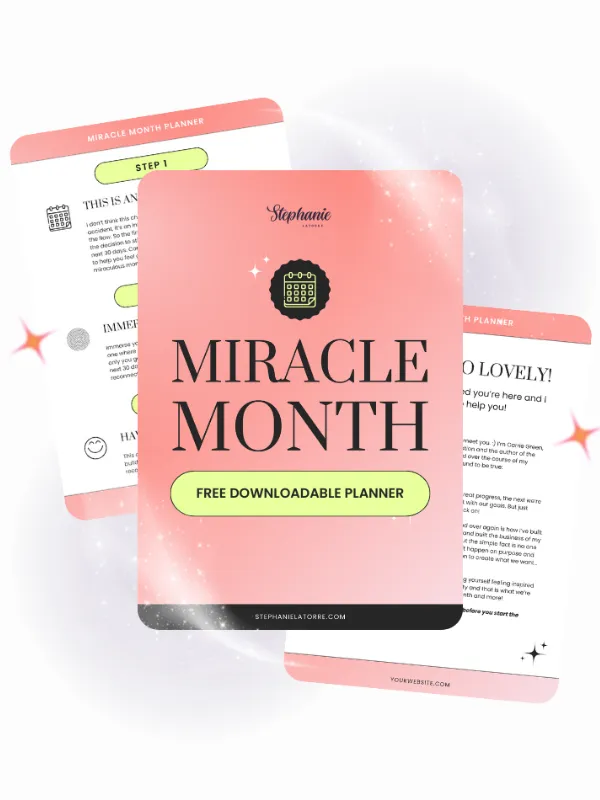
Miracle Month 30-Day Planner — A free 30-day planning tool to help you get aligned, take focused action, and build the momentum your offer launch needs.
FEA Create — The all-in-one business platform for female entrepreneurs. Build your funnels, host your courses, and automate your sales, all in one place. This is the platform I use and recommend.
Female Entrepreneur Association Blog — Packed with practical, inspiring advice for building a profitable online business from a community that truly gets what you are building.
Frequently Asked Questions
How do I know if my offer is the problem or my marketing? Look at your data. If you are getting traffic and genuine interest but no sales, the offer messaging or sales page likely needs work. If you are not getting visibility or traffic at all, it is more likely a marketing and audience-building issue. Either way, start by validating your offer directly with your audience before making big changes.
Do I need a big audience to sell an offer? No, but you do need a warm one. A small, engaged, trust-filled audience will always outperform a large, cold one. Focus on depth of connection and genuine relevance over follower count, especially in the early stages of your business.
How long should my sales page be? As long as it needs to be to answer every question, overcome every objection, and clearly communicate the transformation. For higher-ticket offers, longer pages tend to convert better. For lower-ticket digital products, a shorter, punchy page often works just as well. The rule is: always lead with the transformation, then support it with everything else.
Should I offer payment plans? For most offers above $200, offering a payment plan can significantly increase your conversions. It removes a financial barrier without reducing the perceived value of your offer. Platforms like FEA Create make it easy to set up multiple payment options directly in your checkout flow.
What if I have already launched and it didn't sell? First, breathe. A quiet launch is data, not failure. Use it to ask better questions. Did you reach enough people? Did the messaging connect? Did the price feel aligned with the transformation you're promising? Go back through the five differences in this post and honestly audit your offer against each one. A few targeted tweaks can make a significant difference to your next launch.
How do I price my offer if I am just starting out? Start by anchoring your price to the value of the transformation you deliver, not the number of hours or pieces of content inside your program. Research what others in your niche are charging, consider what your audience is willing to invest, and price with confidence. You can always raise your prices as your results and testimonials grow. For more on this, Copy Hackers has an excellent resource on pricing and positioning worth bookmarking.
Your Offer Audit Checklist
Go through each item honestly before your next launch. Every box you can't tick is simply your next action step.
My offer is written for one specific, clearly defined person
My offer leads with the transformation, not the features
I have validated that my audience actively wants this outcome
My price is presented confidently and without apology
I have a funnel or sales system supporting my offer
My checkout or booking process is simple and frictionless
I have an email follow-up sequence for people who don't buy right away
My sales page is clear, professional, and loads quickly
I am actively nurturing and growing a warm audience
My messaging uses my audience's own words, pain points, and desires
I have removed unnecessary complexity from my offer structure
I feel genuinely confident and excited about what I am selling
Creating an offer that sells isn't about luck, and it isn't reserved for women who have been in business for years. It comes down to clarity: knowing exactly who you serve, what they need, and how to communicate it in a way that makes saying yes feel like the easiest decision they've ever made.
You have something genuinely valuable to offer the world. Now it's time to make sure the world can find it, understand it, and invest in it.
If you are ready to build the infrastructure your offer truly deserves, from funnels and automations to course hosting and checkout pages, FEA Create is where I would start.
And if you want to get clearer on your business direction before your next launch, grab the Coaching Business Planner from my shop. It was made for exactly this moment.
Now go build something brilliant. I am rooting for you every step of the way.

Enjoyed this post? You might also love: